Wheel on vs direct drive trainers: which fits your riding?
Compare wheel on and direct drive indoor trainers by bike compatibility, setup, tire contact, noise and everyday convenience before you buy.
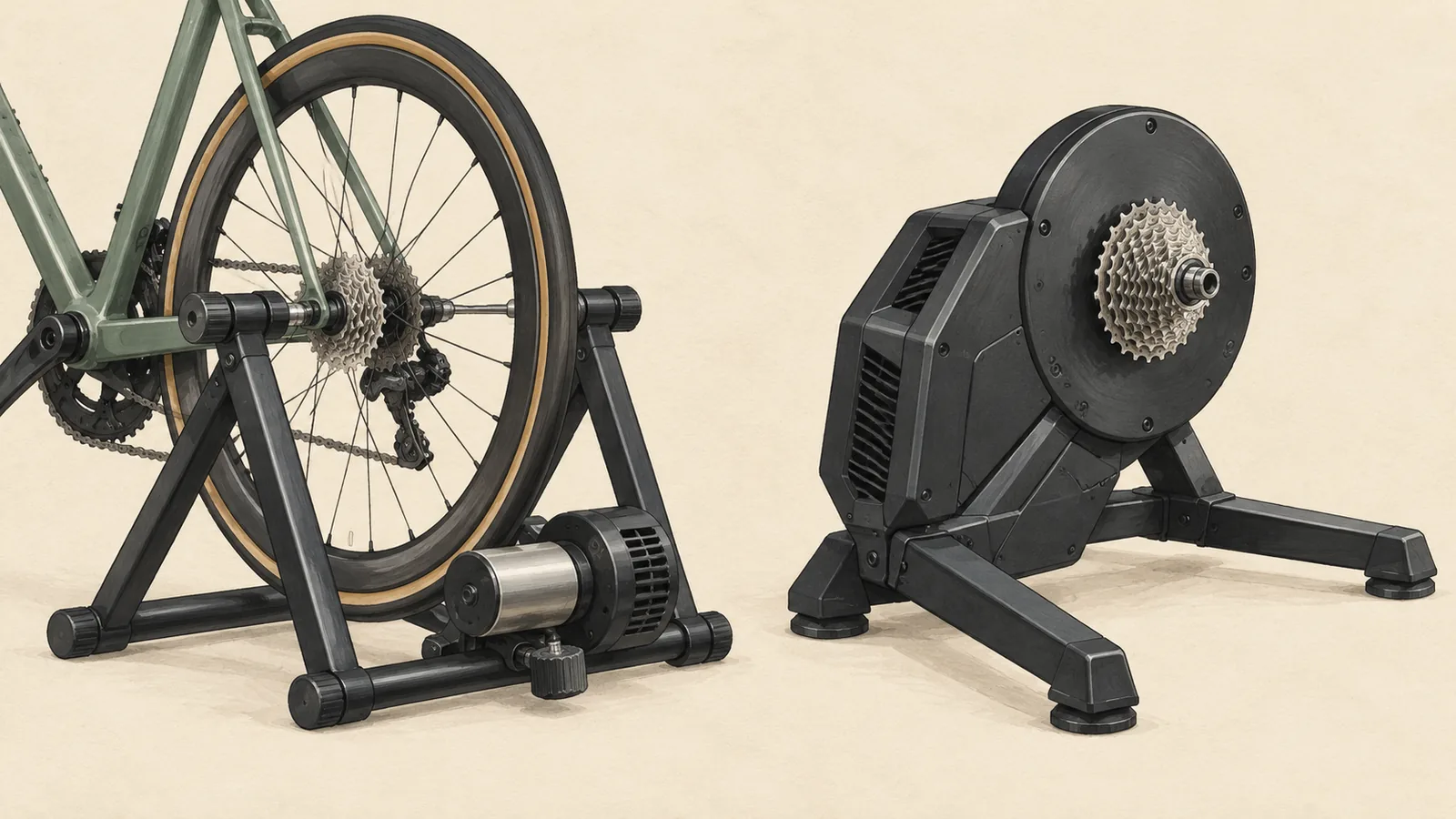
A wheel on trainer keeps your rear wheel in place and presses a roller against the tire. A direct drive trainer replaces the rear wheel, so your chain turns a cassette or compatible sprocket on the trainer. That mechanical difference is easy to picture. What it means for an ordinary evening ride takes a little more thought.
The useful question is not which category wins every comparison. It is which setup fits your bike, your room and the amount of preparation you are willing to repeat. A trainer that makes sense on paper can still be annoying if you have to dismantle half the room to use it.
The differences you will notice
Treat this as a comparison of designs, not a ranking of particular products. The used trainer you are considering might have different adapters, firmware or condition from the current model with a similar name.
| Question | Wheel on | Direct drive |
|---|---|---|
| Does the rear wheel stay fitted? | Yes, with the tire against a roller. | No, the bike mounts directly to the trainer. |
| What needs checking? | Wheel size, tire suitability, axle and clamp fit. | Frame clearance, axle adapters, cassette and freehub fit. |
| What affects repeatable setup? | Tire pressure, roller tension and the model's calibration routine. | Correct mounting and the model's calibration instructions. |
| Is it automatically smart? | No. Check the exact model's power and control features. | Do not assume every function or app is supported. |
| What needs storage? | The trainer, bike and any indoor wheel you choose to use. | The trainer, bike and removed rear wheel. |
Wheel on keeps the wheel, and adds a tire routine
Keeping the wheel fitted can be appealing if you use one bike for everything. You still need the correct skewer or compatible axle adapter, a suitable tire and a secure mounting fit. A modern thru axle bike is not automatically compatible with a wheel on trainer: Wahoo documents dropout shapes and axle standards that do not work with the SNAP.
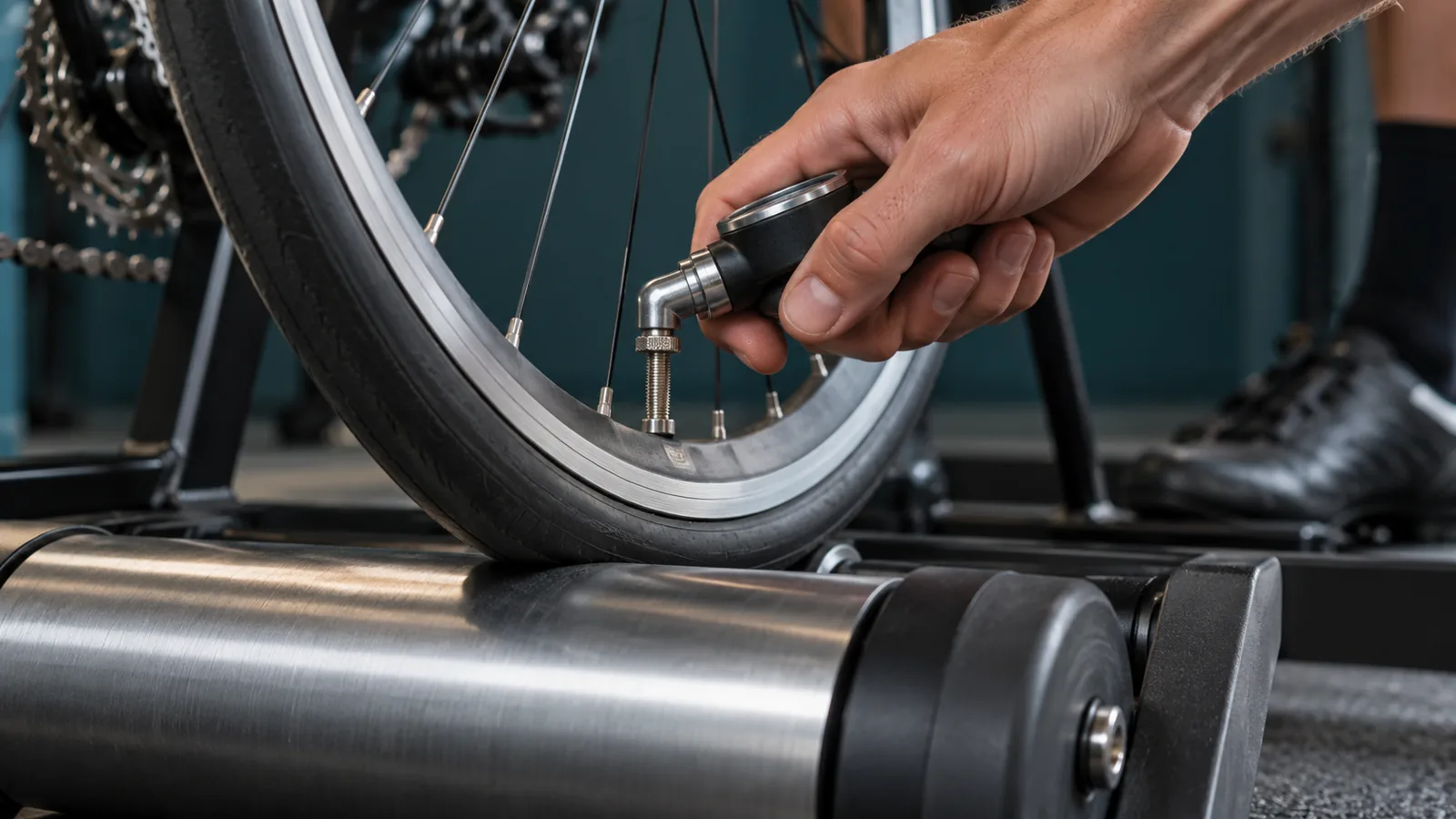
The tire is part of the resistance interface. For repeatable use, follow the model's instructions for pressure, roller tension, warming up and calibration. Do not copy a pressure figure from someone riding a different tire and rim combination. Your wheel and tire limits still matter indoors.
Ask yourself whether you are happy to repeat those checks. If the bike spends most of its time indoors, a manufacturer approved indoor tire or separate compatible wheel may be worth considering. Include that in the real cost and storage calculation rather than treating it as an invisible extra.
Direct drive trades the tire routine for a drivetrain check
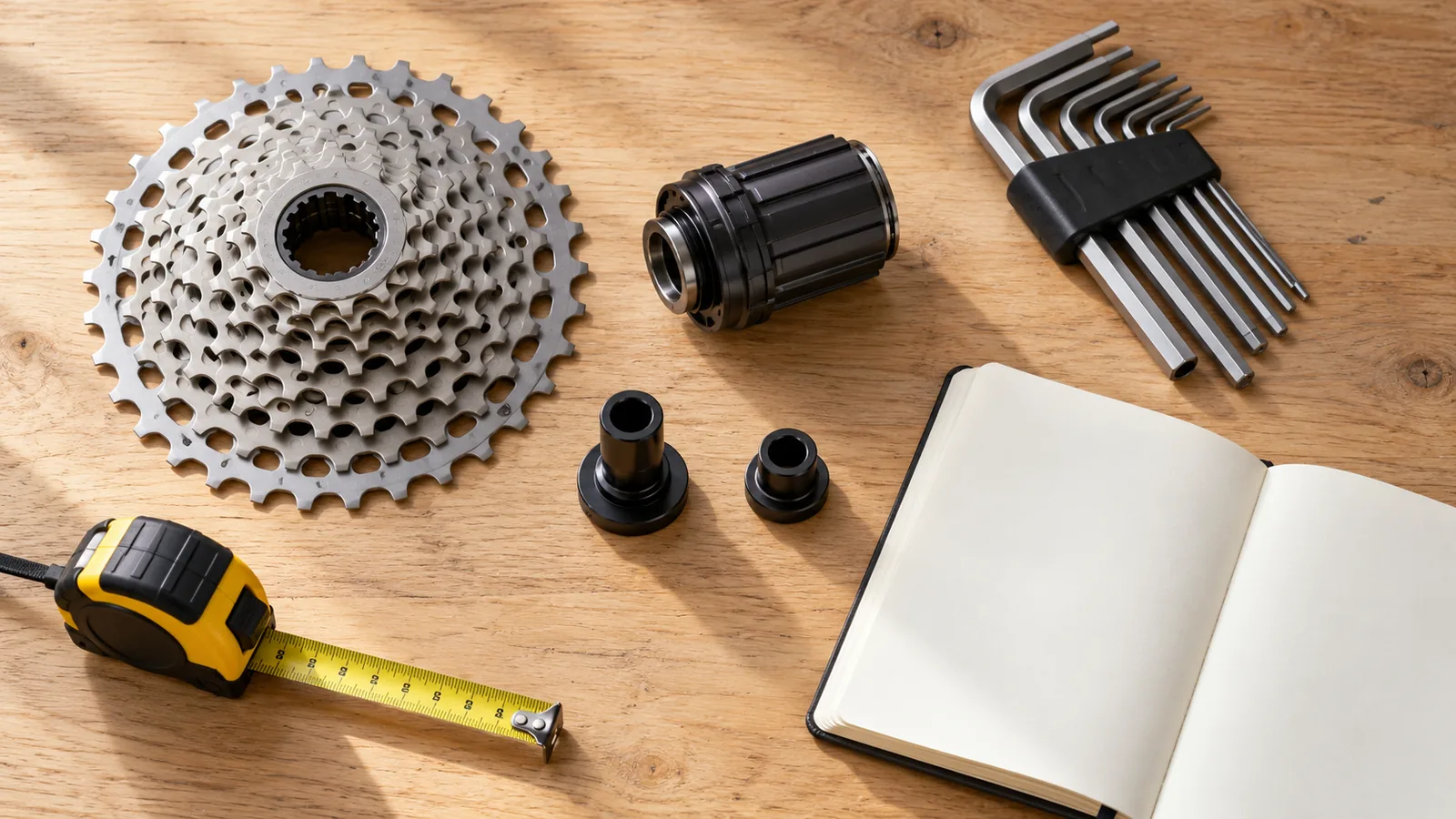
Removing tire contact eliminates that particular setup variable. It also means the trainer must match the parts the wheel previously supplied: a mounting interface and a usable drivetrain connection. Check the cassette's gear count, tooth range and drivetrain family, plus the freehub body underneath it. Matching only the number of speeds is not a complete compatibility check.
Frame clearance matters separately. The axle might fit while a brake caliper or another part of the frame interferes with the trainer. Use the manufacturer's exact adapter arrangement and compatibility list. If the fit requires improvised washers, forced alignment or grinding something down, stop and get a proper compatibility answer.
With a disc brake bike, follow the brake manufacturer's guidance when the rear wheel is removed. Garmin recommends a rear brake pad spacer for bikes on its direct drive trainers to avoid accidental piston movement if the lever is pressed. Keep the correct spacer with your trainer tools so it is not another thing to hunt for.
Listen to the whole setup, not just the trainer
A tire against a roller is another source of sound. Wahoo notes that the SNAP's hum changes with tire pressure, width and tread. Direct drive removes tire and roller noise, but your drivetrain, fan and the way vibration reaches the building still matter. No category label guarantees a silent apartment.
If noise is important, look for a chance to hear the exact setup under normal pedaling. A recording taken beside the trainer cannot tell you what the room underneath will hear. Keep your comparison practical: the same bike condition, similar effort and a realistic fan setting.
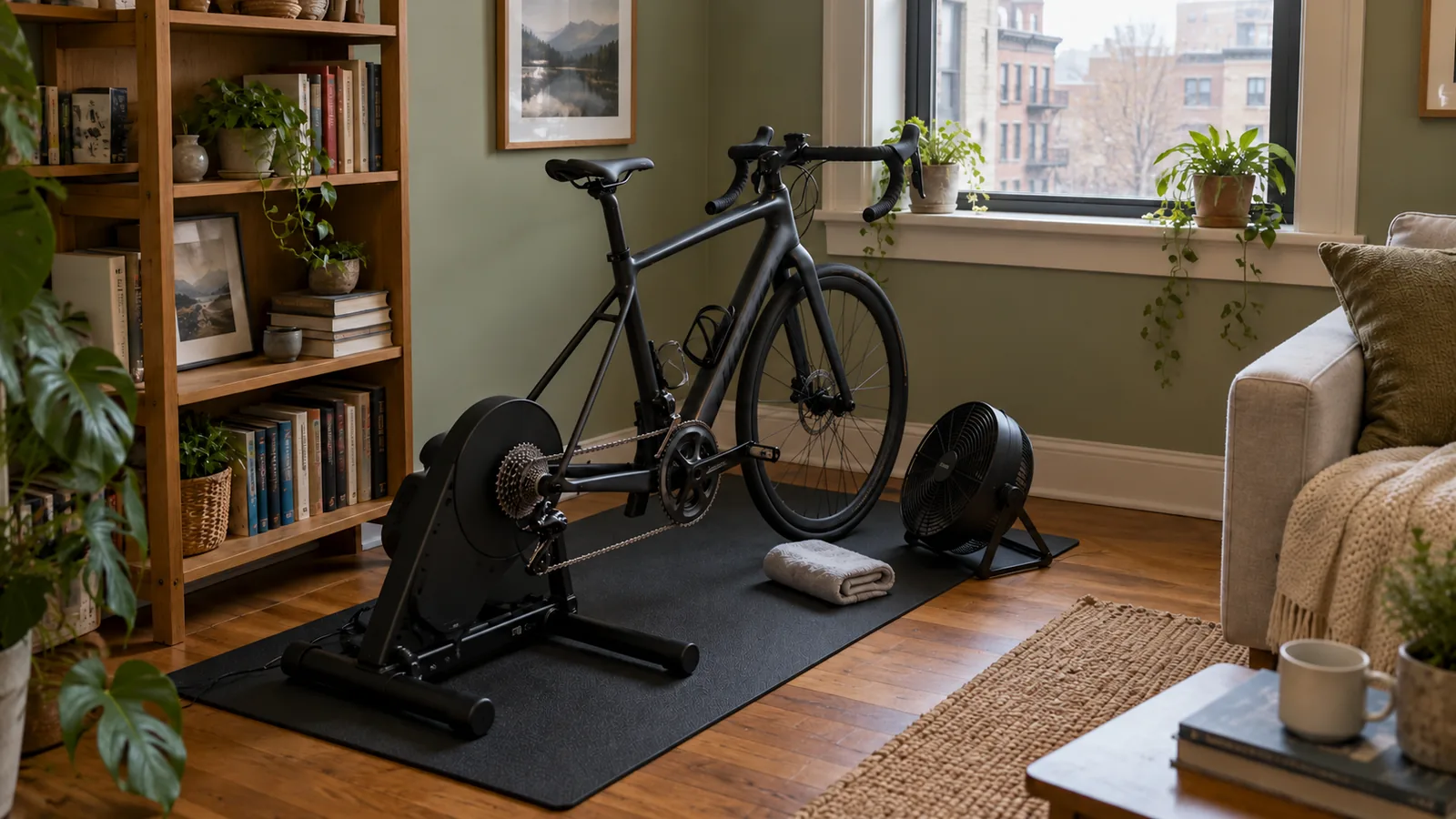
Measure the trainer with its supports fully opened, then add the bike, fan, screen and a clear place to get on and off. Compare how you will move it after the ride too. A compact folded shape is helpful only if the weight and handling are manageable for you.
Choose the inconvenience you can live with
Wheel on can make sense when keeping the wheel installed is valuable and you are comfortable with tire preparation and calibration. Direct drive can make sense when avoiding tire contact matters more and you are happy removing the wheel. For either option, the compatibility check comes before the bargain.
Finally, check the app. Automatic resistance, power reporting and virtual shifting are separate questions. A direct drive unit with a single sprocket can depend on supported virtual shifting for route riding. Buying the more sophisticated mechanical design does not make those software questions disappear.
- Confirm your exact bike model, axle and drivetrain.
- Price the adapters, cassette or tire you still need.
- Compare the complete setup and storage routine.
- Verify your app and device before paying.
Your questions, answered
Are all direct drive trainers compatible with every bike?
No. Check axle standards, adapters, frame and brake clearance, the drivetrain and the manufacturer's known exceptions for your bike model and year.
Can a wheel on trainer change resistance automatically?
Some smart wheel on models can. Check the exact trainer and app rather than assuming all wheel on units are basic or that a Bluetooth connection guarantees control.
Do direct drive trainers need calibration?
It depends on the model and firmware. Some require a manual routine, some calibrate automatically and others do not require calibration. Follow the manufacturer's current instructions.
Sources & useful reading
For compatibility and changing product details, go straight to the source.