Ride Alpe d’Huez indoors: the route, the apps and the pacing
Plan an indoor ride up Alpe d’Huez. Understand the 21 bends, compare Everycol and Alpe du Zwift, and choose a sensible approach to your first ascent.
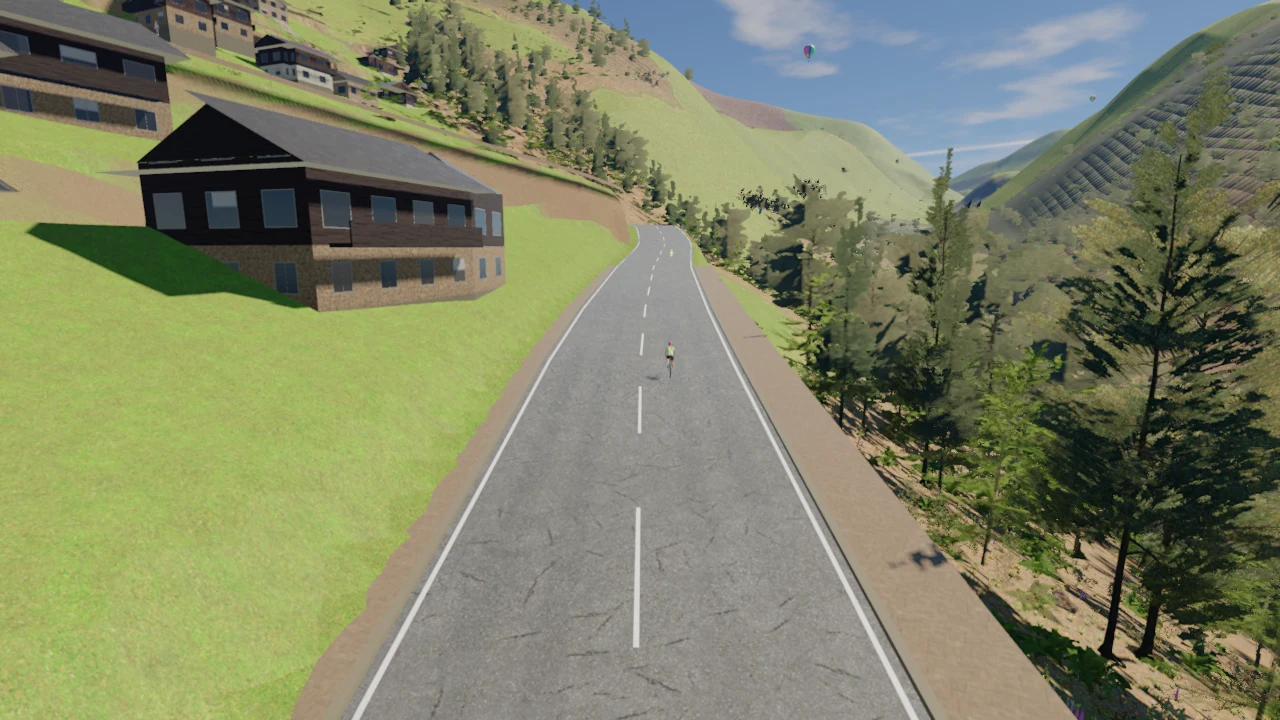
Alpe d’Huez is one of those names that can make a normal evening on the trainer feel like a small occasion. You know there are bends to count, a mountain to work up and a finish somewhere above you.
Before you start chasing a time, it helps to know which version you are riding. The real road, Alpe du Zwift and Everycol’s mapped route share a reference point, but they are not identical rides with interchangeable results.
What makes the real climb distinctive
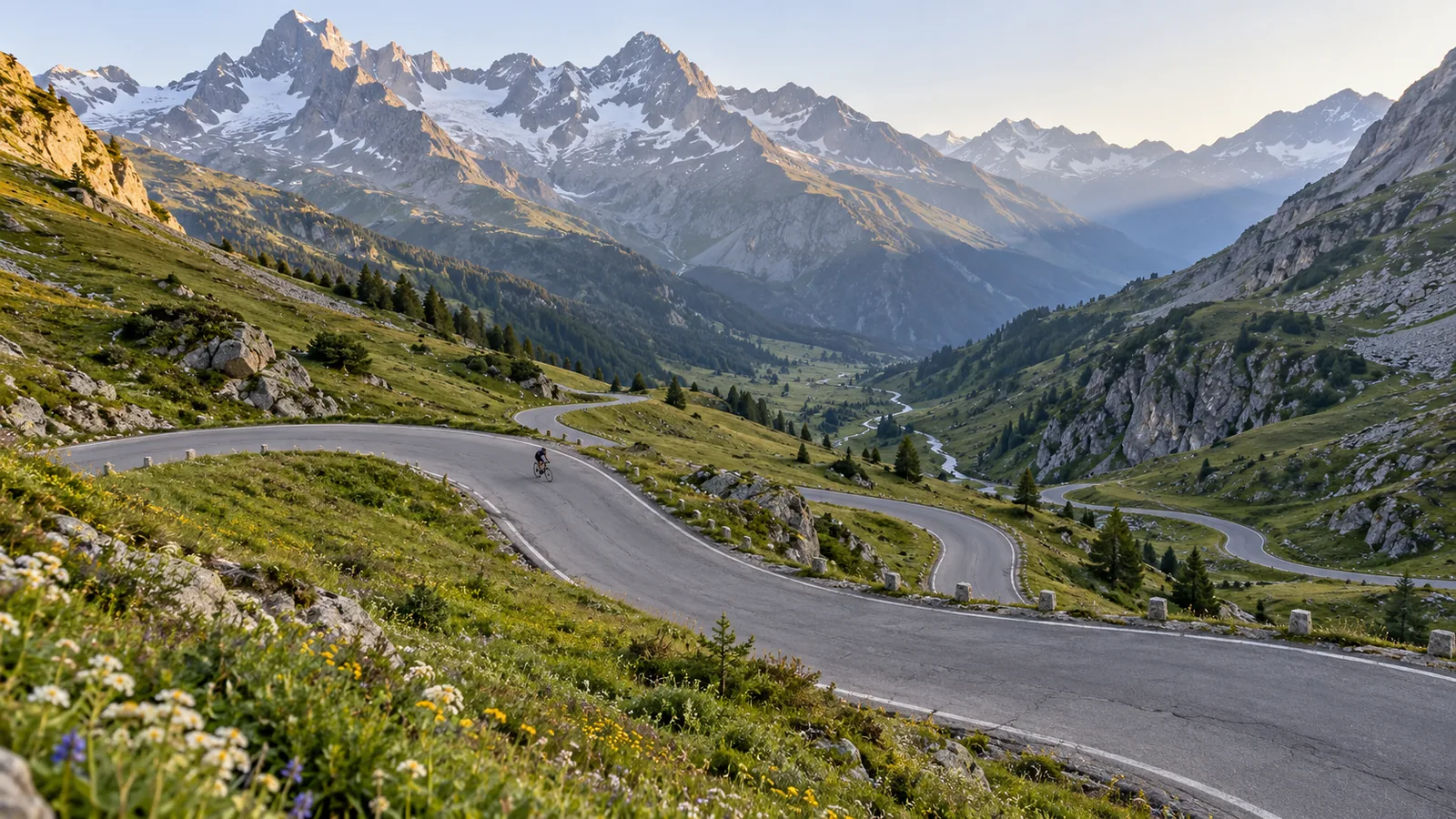
The ascent rises from Bourg d’Oisans toward the resort of Alpe d’Huez through 21 numbered bends. The official tourism guide describes a demanding opening section, the passage through La Garde, and the continuation through Huez toward the finish.
Even official route descriptions use different boundaries. A ride from a tourist office, a timed ascent from its start line and a complete outing with the descent will naturally produce different distances. This is why a single number from a search result needs context.
For an indoor ride, the useful takeaway is the shape of the challenge: a sustained climb broken into recognizable stages. You can use those stages as points to check your effort without turning every bend into a separate race.
The Alpe d’Huez route in Everycol
Everycol’s route starts in Le Bourg d’Oisans, climbs through La Garde and Huez, and ends at L’Alpe d’Huez. The mapped approach before the hairpins is part of the ride.
The simulation measures approximately 15.2 km and 1,136 metres of ascent. Those figures come from Everycol’s route geometry and elevation model. They should not be presented as the official outdoor climb statistics or compared directly with a segment that starts farther along the road.
Open the public route page before riding. It shows the start, finish and elevation profile, which is more useful than guessing from the name. If you are looking at the Col de Sarenne Loop instead, you are choosing a different itinerary that continues beyond the Alpe.
Alpe d’Huez and Alpe du Zwift are different versions
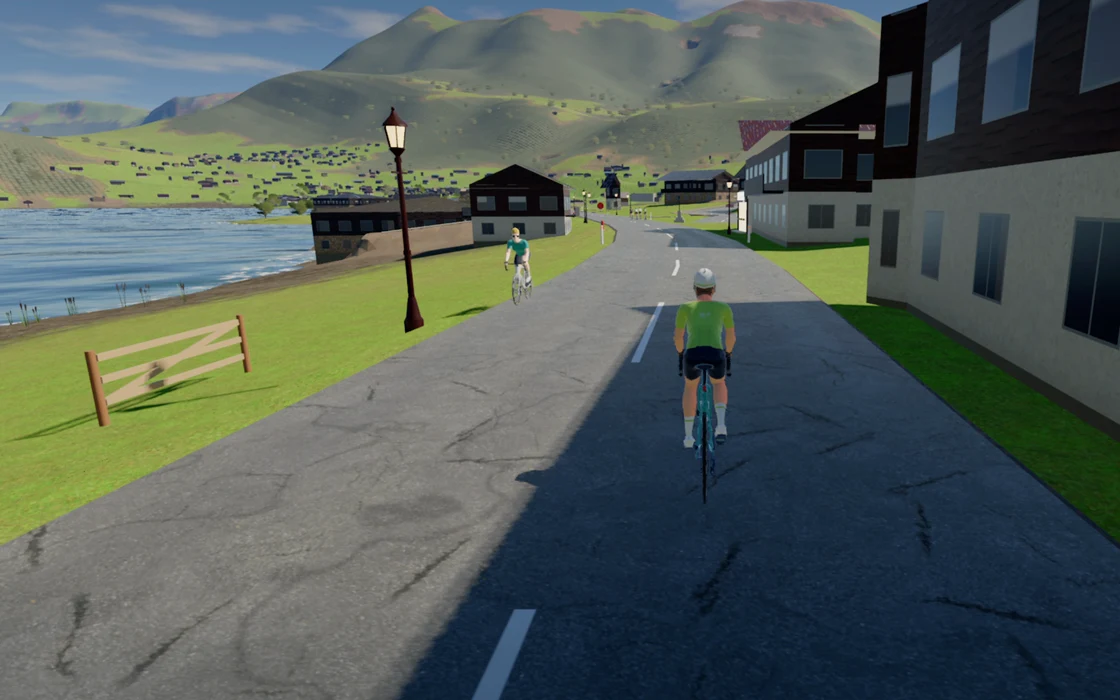
Zwift’s Alpe du Zwift puts a climb inspired by Alpe d’Huez inside Watopia. Zwift’s official introduction describes 21 hairpins and 1,036 metres of climbing. It is a recognizable virtual interpretation, with Zwift’s own world and progression around it.
Everycol places its mapped ascent in the French Alps region and uses its own start, finish, terrain and ride physics. ROUVY also lists an Alpe d’Huez route in its France catalog, using its video based approach to scenery.
Choose the experience you want to look at and the app that works with your equipment. A summit time from one platform is not a fair race against a time from another. Route boundaries, physics and the way each system treats the ride all matter.
| Version | What to look for | Before you compare a time |
|---|---|---|
| Everycol | Mapped road in a 3D French Alps region | Check the full route from Le Bourg d’Oisans |
| Alpe du Zwift | A virtual climb in Watopia | Distinguish the climb segment from the approach route |
| ROUVY Alpe d’Huez | A route from its filmed road catalog | Check the selected recording and its endpoints |
Make your first ascent a discovery ride
It is tempting to search for a target time before you have even paired the trainer. A more useful first goal is to learn how the ride feels. Give yourself enough time, start with working fans and put a drink where you can reach it.
Begin at an effort that leaves you room to settle in. If the opening already feels like a finish line effort, ease back before turning the whole climb into a rescue mission. You can always choose to work harder later; you cannot recover the energy spent in an enthusiastic first few minutes.
Use the bends or named places as check points. Are your shoulders relaxed? Is your cadence comfortable? Can you change gear without rushing? These small checks give you something useful to do besides staring at the remaining ascent.
A steep road and a hard pedal are not the same number
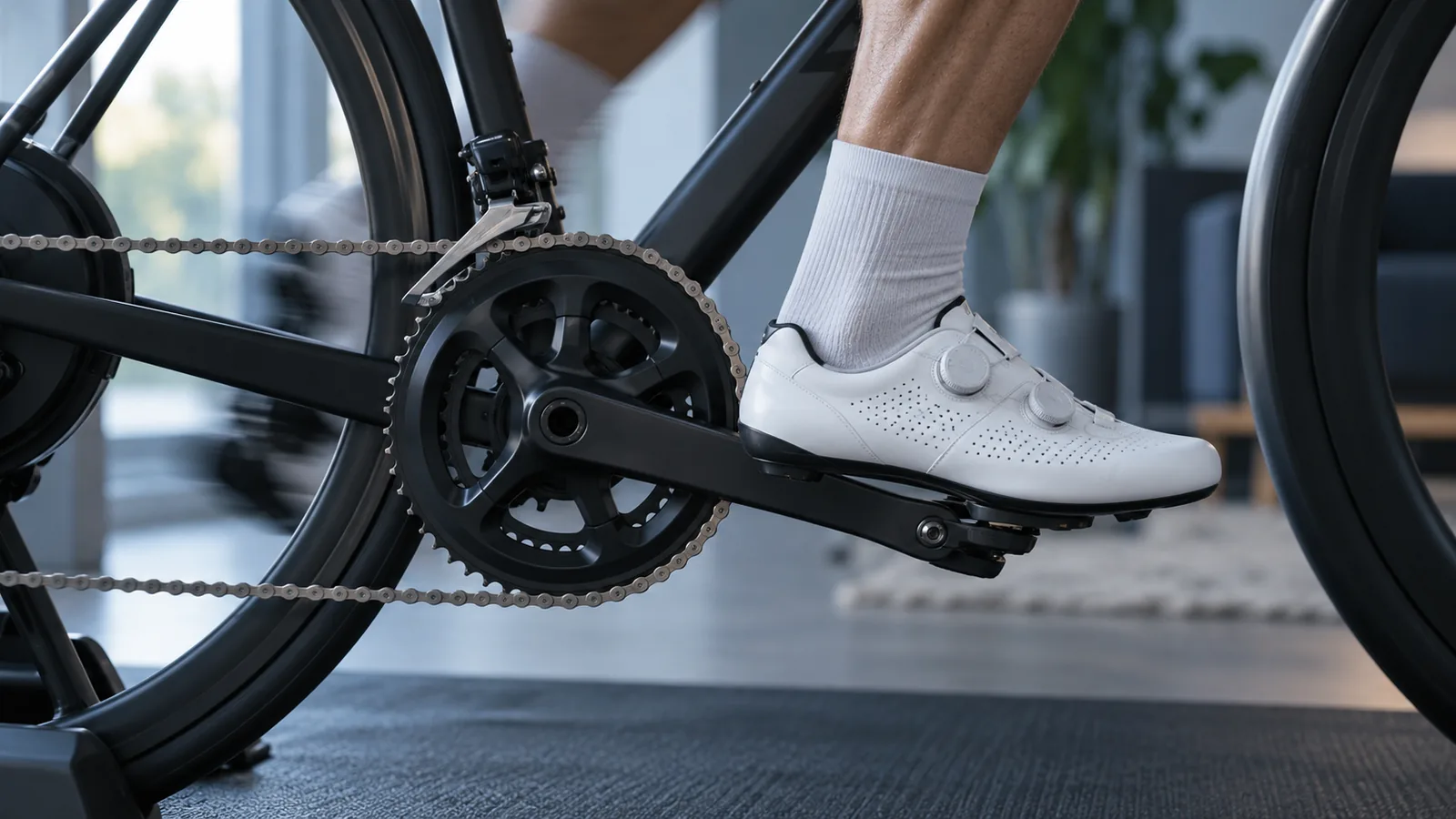
Simulation mode asks a controllable trainer to respond to the virtual road. The resistance you actually feel also depends on the hardware, gears and app settings. Everycol currently caps uphill simulation commands at 8%, even if the mapped road is steeper.
Your virtual rider still travels through the mapped route. A command limit does not mean the mountain has become flat, and it does not make an indoor time an outdoor prediction. It means the physical resistance has a separate limit.
If you choose an ERG workout, the workout target takes priority over the hill’s resistance changes. Choose simulation when your aim is to respond to the climb itself. Choose ERG when you have a particular interval session to complete.
Let the first finish tell you what to try next
After the ride, think about the parts you enjoyed. If you liked a steady climb with one clear destination, the Galibier from Valloire is another option. If you want a longer journey through the same area, look at the Col de Sarenne Loop and read the whole profile.
You can also ride the Alpe again without making it a test. A comfortable repeat can tell you more about your setup and pacing than a single exhausted attempt. Keep the same route and equipment if you want a useful personal comparison.
For an eventual outdoor trip, use current local guidance for access and conditions. Indoor familiarity is enjoyable, but it does not teach the traffic, descending or weather judgment that riding the actual mountain requires.
Your questions, answered
Is Alpe du Zwift the same as Alpe d’Huez?
Alpe du Zwift is Zwift’s virtual interpretation of the famous climb, located in Watopia. It is not the same digital route or physics model as Everycol’s Alpe d’Huez.
How long is Alpe d’Huez in Everycol?
The mapped route is about 15.2 km with 1,136 metres of ascent. These are simulation measurements that include its approach from Le Bourg d’Oisans.
How long will the indoor climb take?
There is no honest single time for every rider and setup. Start with the route profile and your own previous rides. Give your first attempt room to be exploratory.
Sources & useful reading
For compatibility and changing product details, go straight to the source.